

Table of Contents
- What Makes Sourdough Bread Healthy
- Is Sourdough Bread Good for Gut Health
- Authentic vs Commercial Sourdough: What's the Difference
- How to Read Bread Ingredient Labels
- Your Sourdough Selection Checklist
- Common Mistakes When Choosing Sourdough
- Frequently Asked Questions
Last Updated: September 29, 2026
What Makes Sourdough Bread Healthy
Healthy sourdough bread starts with three things: time, quality ingredients, and proper fermentation. The long fermentation process breaks down gluten and phytic acid, making the bread easier to digest. This is what separates real sourdough from commercial bread labeled "sourdough."
At Isaacs Artisan Sourdough, we focus on authentic fermentation methods that develop flavor and nutrition over time. When you choose healthy sourdough bread, you're looking for loaves made with minimal ingredients and extended fermentation, not shortcuts.

The fermentation process creates beneficial acids and improves nutrient absorption. Real sourdough also has a lower glycemic impact than regular bread because the long fermentation changes how your body processes the carbohydrates.
Is Sourdough Bread Good for Gut Health
Yes, authentic sourdough can support gut health better than most breads. The fermentation process creates lactic acid bacteria that survive baking. These beneficial microorganisms may support digestive health.
The long fermentation also breaks down hard-to-digest compounds. This means your gut doesn't have to work as hard to process the bread. Many people who struggle with regular bread find sourdough easier on their digestion.
However, not all sourdough is created equal. Commercial sourdough that ferments for only a few hours won't have these benefits. You need genuine long-fermented sourdough to see potential digestive improvements.
The key difference is time. Real fermentation takes 12 to 48 hours. Quick fermentation (under 8 hours) skips most of the beneficial process.
Authentic vs Commercial Sourdough: What's the Difference
Authentic sourdough uses a living starter and ferments slowly over many hours. The baker controls every step. Flavor develops naturally. The crust cracks and the crumb opens up.
Commercial sourdough often uses commercial yeast and ferments quickly. Some bakeries add sourdough flavoring instead of actual fermentation. The result tastes like sourdough but lacks the digestive benefits.
The difference shows in three ways:
- Fermentation time: Authentic takes 16-48 hours. Commercial often takes 4-8 hours.
- Ingredients: Authentic uses starter, flour, water, salt. Commercial may add dough conditioners or flavor compounds.
- Texture: Authentic has irregular holes and a chewy crumb. Commercial is more uniform.
When you choose healthy sourdough bread, you need to know which type you're buying. Ask the baker how long the bread fermented. If they can't tell you, it's probably not authentic.
How to Read Bread Ingredient Labels
Start at the top of the ingredient list. The first ingredient is what the bread contains most of. For sourdough, it should be flour.
Look for these red flags:
- Dough conditioners (these speed up fermentation and reduce nutrition)
- Added sugar or honey (authentic sourdough doesn't need sweeteners)
- Ascorbic acid (vitamin C added to speed fermentation)
- Mono- and diglycerides (emulsifiers that extend shelf life)
- Soy lecithin (another emulsifier)
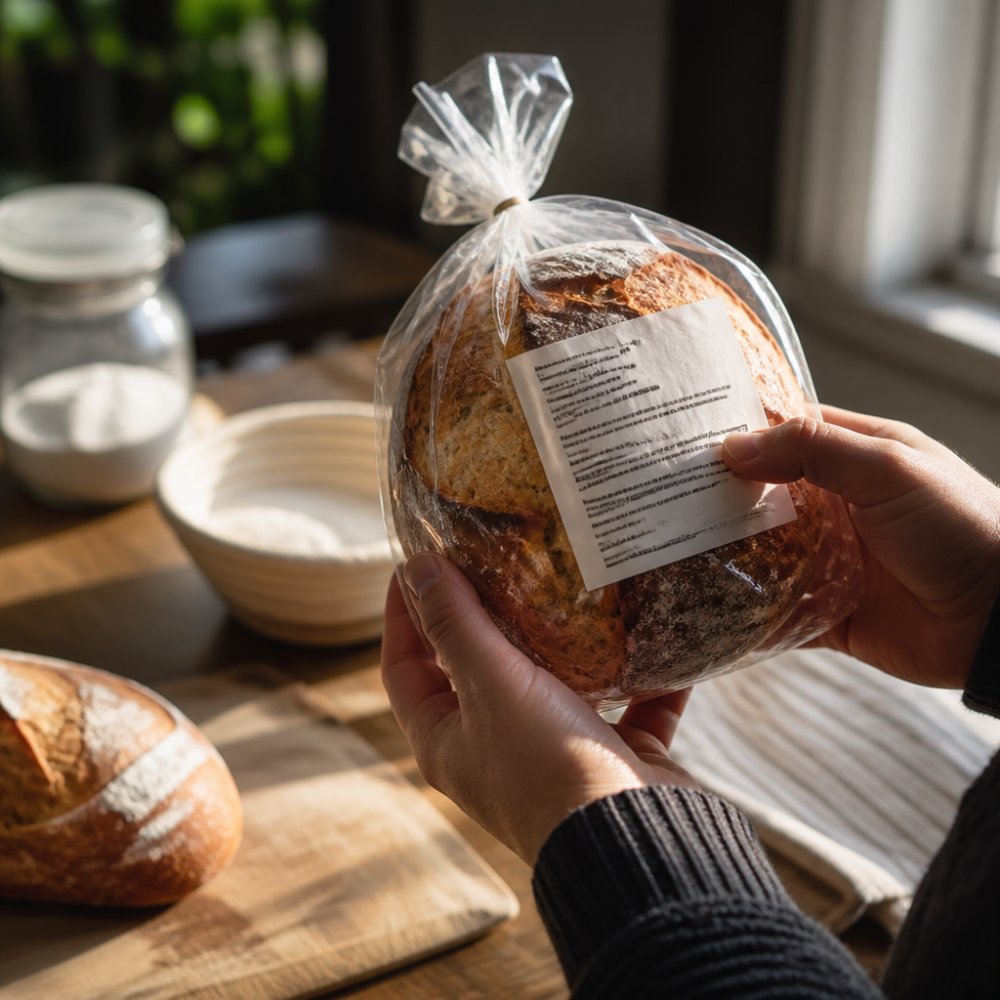
Healthy sourdough has five ingredients maximum. If the list is longer, the baker added things that aren't necessary.
Also check the fermentation claim. The label might say "naturally leavened" or "long-fermented." Some bakeries print fermentation times. If there's no mention of fermentation time, ask before you buy.
Your Sourdough Selection Checklist
Use this checklist when you're at the bakery or looking at online options like Isaacs Artisan Sourdough:
- Ingredient list has five items or fewer
- No dough conditioners or added sugar
- Baker states fermentation time (12+ hours is ideal)
- Crust is thick and crackly
- Crumb has irregular holes (not uniform)
- Bread smells tangy and rich
- Baker uses a living starter, not commercial yeast
- Loaf is hand-shaped, not mass-produced
- Available fresh, not sitting on shelves for days
For Toms River residents, Isaacs Artisan Sourdough checks every box. Our Classic Loaf, Garlic Loaf, and Olive Loaf are handcrafted with high-quality ingredients and traditional methods.
Common Mistakes When Choosing Sourdough
Mistake 1: Trusting the label alone. "Sourdough" on the package doesn't guarantee authentic fermentation. Many breads use sourdough flavoring without real fermentation.
Mistake 2: Assuming all sourdough tastes the same. Fermentation time changes everything. A 4-hour ferment tastes different from a 24-hour ferment. Longer fermentation means more tang and better digestibility.
Mistake 3: Overlooking ingredient lists. You can't tell how long bread fermented just by looking at it. The ingredient list reveals shortcuts. If you see dough conditioners, the baker cut corners.
Mistake 4: Buying from places without real bakers. Mass-produced sourdough from large manufacturers rarely ferments long enough. Local bakeries and subscription services like Isaacs Artisan Sourdough control their process.
Mistake 5: Ignoring freshness. Sourdough is best within 2-3 days of baking. Bread sitting on grocery store shelves for a week loses quality. Weekly delivery services ensure you get fresh loaves.
Mistake 6: Choosing price over process. Cheap sourdough usually means fast fermentation and added ingredients. Real sourdough costs more because it takes time.
Frequently Asked Questions
What ingredients should be in healthy sourdough bread?
Authentic healthy sourdough contains just three basic ingredients: flour, water, and salt. Long fermentation breaks down the flour naturally without requiring commercial yeast or dough conditioners. Look for loaves made with simple, recognizable ingredients and avoid those listing dough improvers, added sugars, or preservatives. Artisan sourdough like Isaacs Artisan Sourdough's Classic Loaf uses traditional methods that rely on natural fermentation rather than additives.
How can you tell if sourdough bread is authentic?
Authentic sourdough has a thick, crispy crust and an open, airy crumb structure with irregular holes. The flavor should have a subtle tang from natural fermentation, not sourness from added acids. Check the ingredient label for just flour, water, and salt. Avoid breads labeled 'sourdough-style' or those fermented for less than 12 hours. Handcrafted, small-batch loaves are more likely to be authentic than mass-produced supermarket versions.
Is store-bought sourdough bread actually healthy?
Many store-bought sourdough breads are not truly healthy because they skip long fermentation. Commercial bakeries often use commercial yeast and dough improvers to speed production, then label the bread 'sourdough' based on flavor alone. These breads lack the digestive benefits of authentic fermentation. Seek out artisan bakeries that ferment for 12+ hours using traditional methods. Fresh, locally delivered sourdough ensures you get the genuine article without additives or extended shelf-life chemicals.
Does sourdough bread have a lower glycemic index than regular bread?
Long-fermented sourdough has a lower glycemic index than regular white or whole wheat bread because fermentation breaks down starches and reduces sugar content. This slower digestion means steadier blood sugar levels and sustained energy. The longer the fermentation period, the greater this benefit. Authentic sourdough with 16-24 hour fermentation offers the most significant advantage. Always verify fermentation time on the label or ask the baker directly.
Choosing healthy sourdough bread comes down to asking one question: How long did it ferment? If the baker can't answer that, it's probably not worth buying. At Isaacs Artisan Sourdough, every loaf ferments for 24 hours using traditional methods and kosher-certified ingredients. We deliver fresh loaves weekly so you never settle for stale bread. Subscribe today and taste the difference real fermentation makes.