

Table of Contents
- How to Tell If Store-Bought Sourdough Is Actually Fermented
- The Two Ingredients That Settle the Question
- How to Identify Authentic Sourdough Bread in a Grocery Aisle
- Benefits of Long-Fermented Sourdough Worth Paying For
- Why Grocery Stores Label Bread Sourdough When It Isn't
- How to Store Fresh Sourdough Bread So It Lasts
- Kosher Certification and Fresh Delivery in Toms River
- Frequently Asked Questions
Last Updated: September 25, 2026
How to Tell If Store-Bought Sourdough Is Actually Fermented
Most bread labeled sourdough in a grocery aisle is not long-fermented. It is commercial yeast bread with sour flavoring added. The question of whether store-bought sourdough is actually fermented comes down to two things: the ingredient list and the fermentation window. Isaacs Artisan Sourdough specializes in premium, kosher artisan sourdough, handcrafted using traditional methods and high-quality ingredients, so we have a clear stake in helping you tell the difference.
Here is the short answer: real sourdough contains flour, water, and salt. Nothing else.
If you see commercial yeast, lactic acid, acetic acid, or "natural flavor" on the label, the bread was not fermented the traditional way. It was acidified. That distinction matters for taste, texture, and how your body handles the bread.
Below, we'll show you exactly how to check a loaf in under 30 seconds, plus what long fermentation actually does to bread.
The Two Ingredients That Settle the Question
Authentic sourdough is leavened by a live culture of wild yeast and bacteria, not by added commercial yeast. The FDA guidance on standardized bread ingredients treats "sourdough" as a flavor descriptor rather than a protected process term, which is why labels vary so widely.
Read the ingredient list and look for these two giveaways:
- Commercial yeast (listed as yeast, baker's yeast, or saccharomyces cerevisiae): the loaf was not leavened by a starter.
- Acidulants (lactic acid, acetic acid, fumaric acid, citric acid): the tang was added, not produced by fermentation.
A true sourdough label reads: flour, water, salt. Some bakers add a touch of malt or seeds, which is fine. What should never appear is a leavening agent other than the starter itself.
How to Identify Authentic Sourdough Bread in a Grocery Aisle
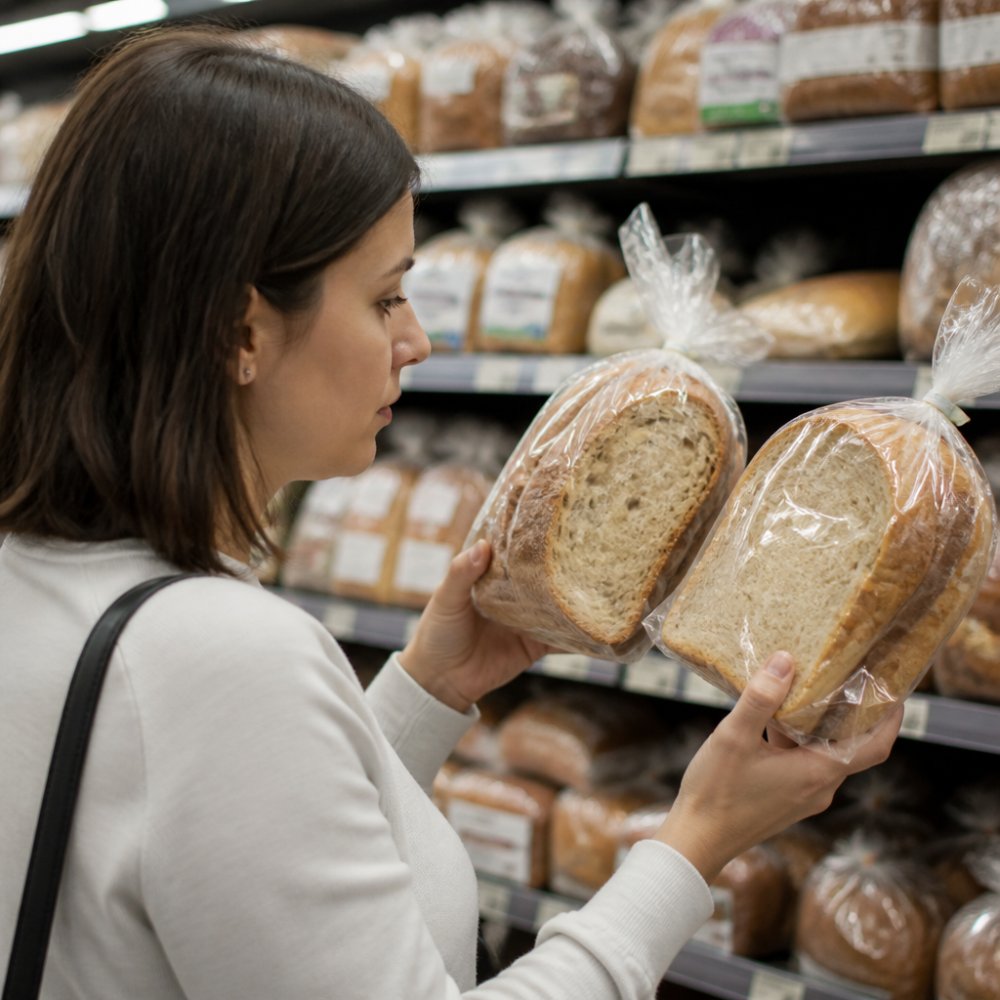
You can spot authentic sourdough without reading a single word on the package. Crust, crumb, and weight tell the story faster than any label. The USDA's food labeling overview explains why terms like "natural" carry no process guarantee, so your eyes and hands are more reliable than the front of the bag.
Crumb, Crust, and the Squeeze Test
Crumb refers to the interior texture of the bread. Long-fermented sourdough has an open, irregular crumb with visible air pockets of different sizes. Commercial yeast bread has a tight, uniform crumb that looks machine-made because it is.
Crust on real sourdough is dark, blistered, and chewy. It comes from a long bake at high heat, which a fast commercial process cannot replicate.
The squeeze test is the fastest check:
- Squeeze the loaf gently. Real sourdough springs back slowly and feels dense for its size.
- Press a slice. If it compresses into a gummy puck and stays there, the gluten was not developed through fermentation.
- Weigh it in your hand. A naturally leavened loaf is heavier than a same-sized commercial loaf because it holds more water.
Benefits of Long-Fermented Sourdough Worth Paying For
The benefits of long-fermented sourdough come from time, not additives. During a slow ferment, wild yeast and lactic acid bacteria break down starches and gluten proteins in ways that fast-risen bread never gets the chance to do.
The practical results:
- Easier digestion. The long acidification process predigests some of the gluten and phytic acid, which is why many people who react poorly to commercial bread find real sourdough sits better.
- Lower glycemic response. The organic acids produced during fermentation slow how quickly the bread's starches convert to sugar.
- Longer shelf life without preservatives. A properly fermented loaf stays fresh for days on the counter because the acids naturally inhibit mold.
If you are buying bread for a household that eats it daily, these are the differences you actually taste and feel. They are also the reason a real sourdough loaf costs more than a mass-produced one. Time is the expensive ingredient.
Why Grocery Stores Label Bread Sourdough When It Isn't
There is no US regulation that reserves the word "sourdough" for naturally leavened bread. Any manufacturer can use it to describe flavor. This is the single biggest reason shoppers are confused.
Three things happen in most commercial bakeries:
- Dough is mixed with commercial yeast for a fast rise, sometimes in under two hours.
- Lactic or acetic acid is added to mimic the tang of fermentation.
- The loaf is labeled "sourdough" because it tastes sour, not because a starter leavened it.
This is not illegal. It is also not fermentation. The Federal Trade Commission's advertising guidance requires labels to be truthful, but "sourdough" as a flavor term is broad enough to cover this practice.
How to Store Fresh Sourdough Bread So It Lasts
Knowing how to store fresh sourdough bread makes the difference between three good days and a week of good slices. The crust is your friend and your enemy: it protects the crumb, but plastic traps moisture and softens it.
Here is what works:
| Storage Method | Best For | How Long It Lasts | Notes |
|---|---|---|---|
| Paper bag | Daily eating | 2-3 days | Keeps crust crisp |
| Bread box | Counter storage | 3-4 days | Breathable, blocks drafts |
| Linen wrap | Short-term | 2-3 days | Traditional and effective |
| Freezer, sliced | Long-term | Up to 3 months | Slice first, then freeze |
| Plastic bag | Never | Softens crust fast | Traps moisture |
For anything past day three, slice the loaf and freeze it. Reheat slices in a 325°F oven for 5-8 minutes and they come back close to fresh. Never refrigerate sourdough; the cold speeds up staling.
Kosher Certification and Fresh Delivery in Toms River
For observant households, the ingredient list is only half the story. Certification is the other half. A loaf can be naturally fermented and still not meet kosher standards if the flour, the equipment, or the baking schedule does not comply.
At Isaacs Artisan Sourdough, our loaves are Pas Yisroel, Yoshon, and Pareve, which means they fit a kosher kitchen without a second thought. We bake in small batches and deliver fresh weekly, so you are not choosing between certification and quality.
Our Classic Loaf is the starting point for most families: naturally fermented, balanced tang, crisp crust, soft crumb. From there, the Olive Loaf and Jalapeño Loaf add savory variety, and the Cinnabuns - 4pk cover slow weekend mornings. Every item is certified kosher and baked fresh, not shipped from a warehouse.


If you have been searching for a sourdough bakery near me that actually ferments its bread, this is what that looks like in practice.
Frequently Asked Questions
How can you tell if sourdough bread is authentic?
Check the ingredient list first. Real sourdough lists flour, water, salt, and a starter culture, nothing else. If you see commercial yeast, vinegar, or dough conditioners, it is not truly fermented. Then look at the loaf: a thick, blistered crust and an open, irregular crumb with visible holes point to a long fermentation. Finally, squeeze it gently. Authentic sourdough springs back slowly, while fast-risen bread feels spongy and collapses.
Does store-bought sourdough contain commercial yeast?
Many supermarket loaves do. The word sourdough on a package is not a regulated term in the United States, so a bakery can add commercial yeast for speed and still use the label, sometimes with a flavoring powder or acid added for tang. To know for sure, read the ingredients. If yeast appears on the list, the loaf was not raised by wild fermentation alone, no matter what the front of the bag says.
What are the benefits of long-fermented sourdough?
A long fermentation gives the wild yeast and bacteria time to break down some of the starches and gluten in the flour. Many people who find regular bread heavy or hard to digest report that a slow-fermented loaf sits better with them. The longer proof also develops a deeper tang and a more complex flavor than a quick commercial rise can produce, which is why small-batch bakers protect that time instead of rushing it.
How do I store fresh sourdough bread so it stays good?
Keep the loaf cut-side down on a board or in a paper bag at room temperature for the first day or two. Plastic traps moisture and softens the crust, so avoid it unless the bread is fully cooled and you plan to freeze it. For longer storage, slice the loaf, wrap it tightly, and freeze it for up to three months. Reheat slices in a 325°F oven for a few minutes to bring the crust back.
The hardest part of buying real sourdough is trusting the label, and most labels do not earn that trust. Isaacs Artisan Sourdough removes the guesswork: every loaf is naturally leavened, slow-fermented, certified kosher, and delivered fresh to your door each week in Toms River. Start with the Classic Loaf and taste what fermentation is supposed to do. Subscribe today and never settle for sour-flavored commercial bread again.