

Table of Contents
- Start With the Crust and Crumb: Visual Signs of Authentic Sourdough
- The Sourdough Ingredients List: What Belongs and What Does Not
- Commercial Yeast vs Wild Yeast in Bread: Why It Changes Everything
- How to Identify Real Sourdough Starter in the Bread You Buy
- Shelf Life, Scent, and Taste: Three More Tests for Authentic Sourdough
- How to Store Artisan Sourdough Bread So It Stays Fresh
- Where to Find Authentic Sourdough in Toms River, NJ
- Conclusion: Trust the Crust, the Crumb, and the Label
- Frequently Asked Questions
Last Updated: October 4, 2026
Start With the Crust and Crumb: Visual Signs of Authentic Sourdough
Learning how to tell if sourdough is authentic starts with your eyes, not the label. A real loaf shows it before you ever take a bite. At Isaacs Artisan Sourdough, we bake in small batches using traditional methods, so we know exactly what those signs look like. This guide covers the visual cues, the ingredient list, and the storage habits that separate true sourdough from supermarket imitations.
Authentic sourdough is bread leavened only by a live culture of wild yeast and bacteria, never by commercial yeast. That single fact shapes everything you see, smell, and taste.
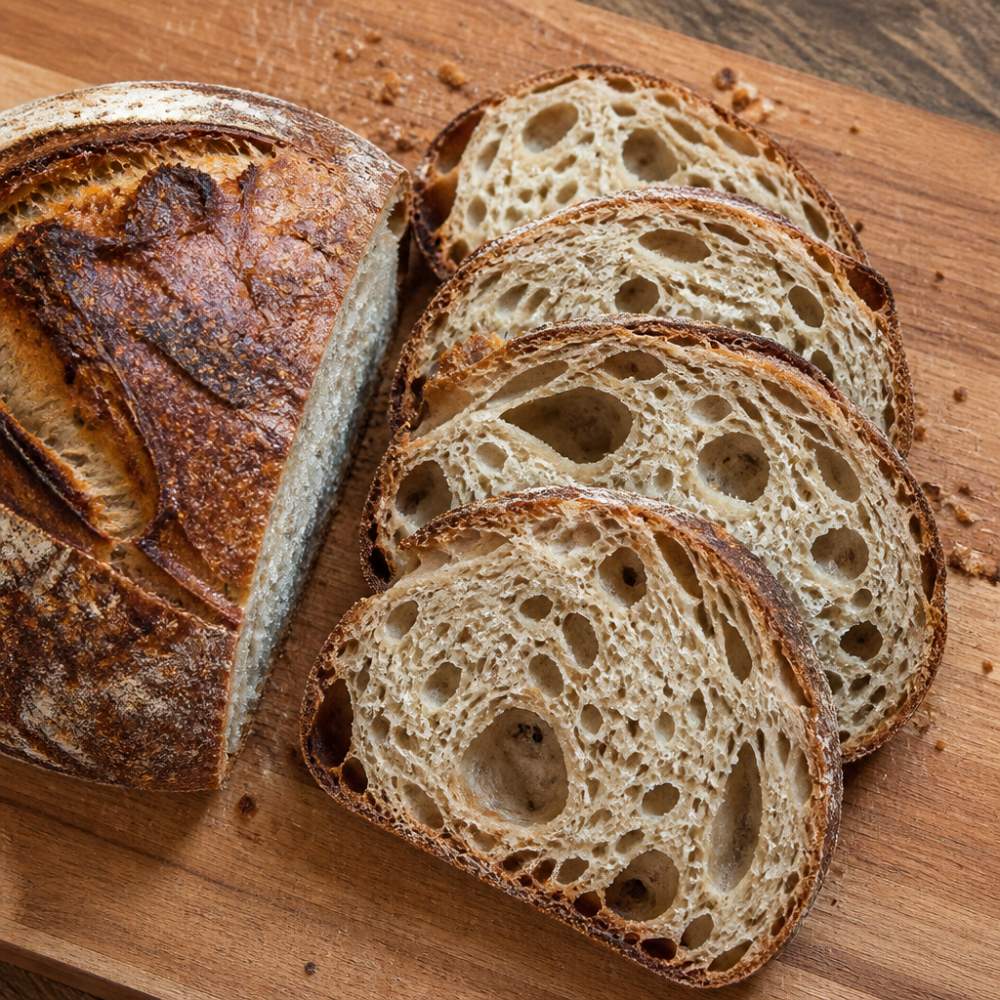
What a Real Sourdough Crust Looks Like
A genuine crust is deep brown, blistered, and crackly. It should sound hollow when you tap the bottom. Pale, uniform crusts usually mean a fast rise with commercial yeast.
Look for small bubbles across the surface. Those blisters form during a long, slow ferment.
Reading the Crumb Structure
Cut the loaf open. Real sourdough has an open, irregular crumb with air pockets of different sizes. The interior looks glossy, not dry or cakey.
Tight, even crumb with tiny uniform holes is a red flag. That pattern comes from fast, commercial rising.
The Sourdough Ingredients List: What Belongs and What Does Not
A true sourdough ingredients list is short: flour, water, salt, and a live starter. That is it. If the label runs longer, read it closely.
Here is what belongs and what does not:
- Belongs: wheat or rye flour, water, salt, and a sourdough culture
- Does not belong: commercial yeast, vinegar, citric acid, or dough conditioners
- Watch for: "natural flavor" or "cultured wheat" hiding shortcuts
Some industrial bakers add vinegar or citric acid to fake the tang. Others add commercial yeast for speed. Neither is real sourdough.
Commercial Yeast vs Wild Yeast in Bread: Why It Changes Everything
The difference between commercial yeast and wild yeast in bread comes down to time. Commercial yeast is a single lab-grown strain that rises dough fast, often in an hour or two. Wild yeast is a living community of yeasts and bacteria that needs many hours, sometimes a full day, to lift the dough.
That slow ferment is not just tradition. It changes the flavor, the texture, and how the bread feels after you eat it. Many people who find regular bread heavy say slow-fermented sourdough sits better with them.
The USDA guidance on food fermentation notes that controlled fermentation is a long-standing food preservation method. The slow process also develops the tang and chew you cannot rush.
How to Identify Real Sourdough Starter in the Bread You Buy
To identify a real sourdough starter at work, look for the marks it leaves. A live culture creates an uneven rise, a slightly chewy crust, and a tang that builds as you chew.
Ask the baker directly. A real bakery will tell you how long the dough fermented and what is in the starter. Vague answers are a warning sign.
Here is a quick checklist for reading a loaf:
- Crust is deep brown and blistered
- Crumb is open and irregular
- Ingredient list has no commercial yeast
- Bread feels heavy for its size
- Scent is tangy, not sweet
Shelf Life, Scent, and Taste: Three More Tests for Authentic Sourdough
Real sourdough often keeps longer than soft commercial bread because the ferment slows spoilage. It may also go stale faster once cut, since there are no preservatives holding it soft.
Scent and taste seal it. Genuine sourdough smells tangy and slightly earthy. The flavor is complex, with a gentle sour note that lingers.
Commercial imitations taste one-note and sweet. The tang is sharp and flat, not layered.
How to Store Artisan Sourdough Bread So It Stays Fresh
Storing artisan sourdough bread well comes down to air and moisture. A cut loaf needs protection without trapping steam.
Here is how we handle it:
- Keep the loaf cut-side down on a board for the first day
- Wrap it in a cotton bag or beeswax wrap after that
- Skip the fridge, which dries bread out fast
- Freeze full slices in a sealed bag for up to a month
The FDA food storage guidance reminds home cooks to keep perishable foods safe and to reheat thoroughly. A little care keeps a good loaf at its best.
Where to Find Authentic Sourdough in Toms River, NJ
Finding authentic sourdough in Toms River, NJ means looking for a baker who ferments slowly and bakes fresh. Isaacs Artisan Sourdough bakes handcrafted loaves in small batches using traditional methods.
Our Classic Loaf ($16.25) has a balanced tang and a soft, airy crumb. It is Pas Yisroel, Yoshon, and Pareve, so it fits a kosher kitchen. For variety, try our Olive Loaf, Garlic Loaf, or Jalapeño Loaf, each $17.25.

If you have searched for "authentic sourdough near me," a weekly delivery solves the problem. You get fresh bread without the drive.
| Loaf | Price | Flavor | Best For |
|---|---|---|---|
| Classic | $16.25 | Balanced tang | Everyday Shabbos table |
| Olive | $17.25 | Savory, rich | Charcuterie and dips |
| Garlic | $17.25 | Roasted garlic | Soup and pasta nights |
| Jalapeño | $17.25 | Mild heat | Sandwiches and eggs |
Conclusion: Trust the Crust, the Crumb, and the Label
Spotting real sourdough takes a minute once you know what to look for. The crust blisters, the crumb opens up, and the label stays short. When in doubt, ask how long the dough fermented.
If you want authentic sourdough without the guesswork, Isaacs Artisan Sourdough delivers. Our loaves are handcrafted in small batches, baked fresh, and certified Pas Yisroel, Yoshon, and Pareve. Subscribe today and get Shabbos-ready sourdough brought to your door each week.
Frequently Asked Questions
What are the only three ingredients in authentic sourdough bread?
Authentic sourdough contains just three ingredients: flour, water, and salt. The rising power comes from a live starter, a culture of wild yeast and beneficial bacteria that ferments the dough naturally. When you read a label and see enriched flour, commercial yeast, dough conditioners, or preservatives, that loaf is not true sourdough. A clean three-ingredient list is the fastest way to confirm what you are buying, whether at a bakery counter or through a delivery service like Isaacs Artisan Sourdough.
Does real sourdough contain commercial yeast?
No. Real sourdough rises only from wild yeast captured in a flour-and-water starter. Commercial yeast is a single, fast-acting strain that produces quick, uniform rises but none of the tangy flavor or slow fermentation that defines authentic sourdough. If a label lists yeast as an ingredient, the bread was likely sped up with commercial yeast and may only have sourdough flavoring added. Checking for that one word tells you most of what you need to know.
Why does authentic sourdough have a longer shelf life?
The long fermentation that wild yeast requires produces natural acids that slow mold and staling. A true sourdough loaf often stays fresh for three to five days at room temperature, compared to a day or two for commercial bread. That longer window is a practical signal of authenticity: if your loaf is still good on day four, the fermentation was real.
Is sourdough bread healthier than regular bread?
Many people find sourdough easier to digest because the long fermentation partially breaks down gluten and phytic acid, the compound that blocks mineral absorption. That said, sourdough is not gluten-free, so anyone with celiac disease should avoid it. For everyone else, the slower fermentation and short ingredient list make authentic sourdough a more digestible choice than mass-produced sandwich bread. Look for a loaf made with a real starter and no added commercial yeast to get those benefits.